 In the financial bust of just five to six short years ago, prices of financial assets across the board were in free-fall. Even when prices stabilized at bargain levels, liquid and solvent buyers were frozen in place, unable to bid.
This is because in a deleveraging-inspired selling panic, prices disconnect from the underlying understanding of value. It left potential investors yearning for price discovery.That is, they sought the comfort of believing that financial assets trading in the market were priced below what one could expect from investors attuned to both upside possibilities as well as downside risks.
Much the same is happening today — not that prices are falling relative to some traditional notion of value, but rather prices have thrust beyond what traditional metrics of value easily justify.
A further source of discomfort is not just the level of prices but the pricing inconsistency between bonds and stock. There now exists strong support simultaneously for both, which typically occurs in eras associated with greater efficiency in production, widening profit margins and strong economic growth, without inflation.
And that expectation is not widely held today.
Rather, there are a variety of worries still on the horizon, some near-term and some longer-term.
They include a continued respect for the Great Recession, the economic and financial implications of debt finance or taxation to pay the Baby Boomers’ entitlements, and the uneasiness that the central banks are setting markets up again for another asset bubble, among others.
Pick your economic poison and there are lots of candidates that impact investors’ assessment of profit realization and growth, sovereign debt risk, currency risk and inflation risk, all the things that investors pay attention to.
What creates the great pricing disconnection is that central banks indeed share many of those fears, as do investors — and as a result, they purchase financial assets as a nostrum for all those ills. The liquidity provided to investors from the sale of their assets to the central bank is then spent on other investments, which in turn drives prices upward across the board.
And more central bank fire power was added recently when the European Central Bank joined the other major central banks. In the case of Europe, there are multiple problems being addressed via large-scale asset purchases, including economic lethargy, commercial bank funding problems, government debt sustainability, and the fear of deflation.
Given that array of serious issues, the ECB one-upped the Fed’s zero interest rate policy with a negative interest rate policy, not just in real terms but in nominal terms (at least for bank deposits at the central bank).
Not to be outgunned, the Fed made another addition to the list of concerns that require large-scale asset purchases: The eradication of long-term unemployment among those short on job skills.
But moreover there is now a dynamic that is setting in among the major central banks. They can’t be outgunned in asset purchases or their currency will rise in value and create comparative advantage problems that would inhibit their exports and their economic recovery.
So the central banks are getting close to the interactive dynamic of having to respond with enough asset purchase intervention to offset the pressure for their currency to appreciate due to the intervention of others. We have entered a modern day beggar-thy-neighbor dueling of central banks that seek to lock in exchange rates with asset purchases. This of course elevates asset pricing across the board of investment categories and across countries.
The result is that perceived risks are not being translated into lower market prices by investors; they are being translated into higher market prices by central banks — which is equally true for bonds and stocks.
The irony is that we have one large financial segment buying because of their economic fears (central banks) and the fearful private investors are buying despite some of the same fears because they believe that central banks won’t quit supporting their assets.
The net result is very high bond prices and a bottoming out of yields and yield spreads, which in the case of the Euro Zone has taken some of the periphery bonds yields lower than U.S. bond yields.
And in the equities markets, the medium P/E ratio (shown below in red) is elevated unless one expects broad-based improvement in economic growth with rising profit margins.
As a result, financial prices do not reflect market expectations of anything but central bank willingness to participate in the asset buying fix. 
And there are too few niches in the markets that will be unaffected or protected from the vulnerability of central bank restraint if it were to occur, but the search is on and is centering on “alternative” assets.
As long as this pricing disconnect continues, there are a lot of textbooks and mindsets that need to be revised as to what prices are trying to tell us about risk and opportunity.
At the moment, financial market prices float detached from the anxieties of market investors as long as the same anxieties drive the central banks into action.
Somewhere there are real market prices to be discovered when the central bank fog is lifted, but for an individual central bank to drop out of the fix requires all central banks to simultaneously back off of this modern day beggar-thy-neighbor interaction in concert, or else they would be at a relative disadvantage in foreign trade.
Sign up to receive the Spellman Report. Bracing financial and economic insight. Now with free delivery!
 Thomas Piketty, a name you are not likely familiar with, is a French economist who has given voice to the notion that there has been a growing concentration of wealth at the upper end of the spectrum both in Europe and the U.S. That is, the rich are getting richer at a faster rate than others. And of course, what follows is the Robin Hood reflex to redistribute.
 The antidote to a troubled macro environment since Keynes wrote the book in the 1930s has been the dual demand-side sledgehammers of government deficit spending and monetary expansion.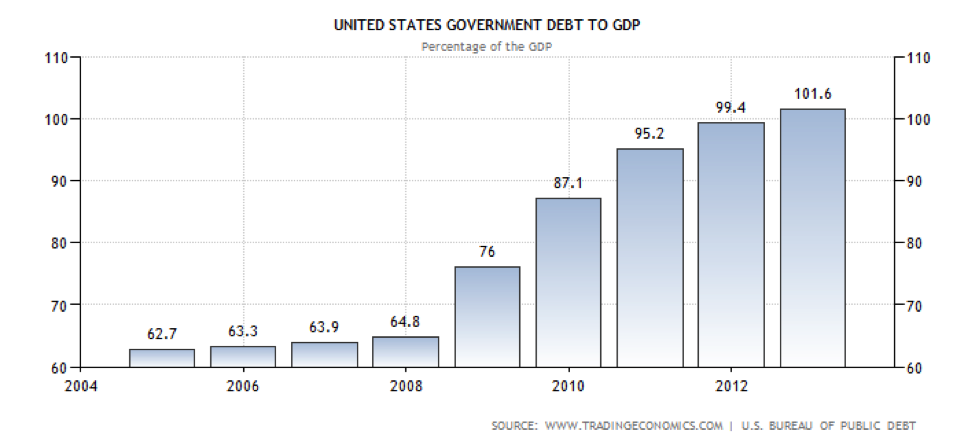
 In a recent Texas Enterprise presentation, I described how losses to Cyprus depositors could occur elsewhere. Moreover, I suggested that this was not a one-time aberration of our understanding of normal. Rather, this is the new normal, better described by a