
Follow Us!


-


-

Videos
- The Vulnerability of Private Wealth to Government Financial Stress
- QEs, Currency Wars, the Trillion Dollar Platinum Coin and the Route to “Modern” Inflation
- VIDEO - Texas Financial Market Roundtable 2012

- Roadblocks to Recovery an Interview with Dr. Lacy Hunt

- Frank Beck on Investing in Uncertain Times

- The Vulnerability of Private Wealth to Government Financial Stress
Category Archives: The Spellman Report
Only the Shadow Banking System Knows

Since last October the stock market has been on a run. The Federal Reserve is now taking credit for it and indicating that it was a policy intention of the monetary leap forward known as Quantitative Ease. By the Fed’s own admission they are promoting financial leverage and don’t know the extent to which they are creating an asset bubble, a responsibility they now have the obligation to monitor and control. So far so good, but beware of a Black Swan Event leading to asset deleveraging. Continue reading
Posted in The Spellman Report
Tagged black swan event, money multiplier, QE2, repo market, shadow banking system
Comments Off on Only the Shadow Banking System Knows
The Life Support Economy Has a Pulse
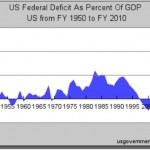
While languishing for 18 months after the supposed ending of the Great Recession, the economy now has a pulse. While many claim this is a return to a normal self sustained cyclical recovery it is being bought and paid for by new less heralded government income support programs. This is a vulnerable, mild income flow recovery that is over priced in the equity markets that doesn’t repair the balance sheets of the consumer, the banks, the municipalities, the states, the central bank or the government. Continue reading
Posted in The Spellman Report
Comments Off on The Life Support Economy Has a Pulse
Not Since The Days of Jimmy Carter
Recently, the Federal Reserve undertook a $600 Billion government bond buying program known to the market as Quantitative Ease 2 or QE2. This has invoked fears of very large scale money printing and inflation and has sent chills rippling through financial markets reminiscent of the 1970s. The inflation expectations created by the Fed itself run counter to the Fed’s goals. Read about the lessons of the Jimmy Carter years regarding the limits of how far a central bank can print its way out of our economic problems and what happen if it exceeds those limits. Continue reading
Posted in The Spellman Report
Comments Off on Not Since The Days of Jimmy Carter
How Should Investors Respond When The Markets Overrule the Fed?
If what I’m about to say sounds like Greek to you, I suggest you find an investment advisor who understands these issues. It’s a confusing topic for many, but the implications are enormous for every investor. In 2002, when examining … Continue reading
Posted in The Spellman Report
Comments Off on How Should Investors Respond When The Markets Overrule the Fed?
On the Ratio of Rich to Poor Uncles

Once again the fragility of the European PIIGS sovereign risk is findings its way back into the news which is another problem the global economic and financial community would like to be without. The pricing of Greece’s sovereign debt has … Continue reading
Posted in The Spellman Report
Tagged bank insolvencies, Contagion, Debt Satiation, government debt multiplier, Greek Debt, kicking the can down the road, Poor Uncles, Rich Uncles, Rule of Law, Sovereign Default
Comments Off on On the Ratio of Rich to Poor Uncles
The Missing Link to Economic Recovery
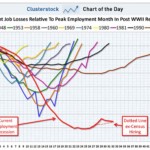
At the annual monetary policy gathering in Jackson Hole, Wyoming last month the issue on the table was the responsiveness of the economy to government stimulus. The issue took heightened significance when it was reported that the second quarter GDP annualized growth rate was revised downward to 1.6%. This less than stellar GDP performance caused Fed Chairman Bernanke to review the remaining monetary policy tools left after which he lamented that “the benefits of each tool outweigh the associated costs and risks of using the tool”. Continue reading
Posted in The Spellman Report
Comments Off on The Missing Link to Economic Recovery
The Third Policy Way on the Third Anniversary
The debt satiation economy has been resilient to either expansionary fiscal or monetary policy corrections thus far and the economic malaise continues. The alternative of government debt austerity programs do not stand much of a chance of being helpful either. The third policy way is to attack the the heart of the debt satiation problem by forgiving private debt which is likely to be announced shortly. The benefits and costs are discussed. Continue reading
Posted in The Spellman Report
Comments Off on The Third Policy Way on the Third Anniversary
The Debt Satiation Economy - Part 1
The current recession is not the prototype garden variety post-WW II US cyclical experience. Rather the economic/financial malaise is driven by the accumulation of consumer debt and now government debt relative to the income sources to sustain it and economic policy serves to increase debt satiation without curing the recession. Continue reading
Posted in The Spellman Report
Comments Off on The Debt Satiation Economy - Part 1
The Smoke and Mirrors of The Greek Bailout Package
The presumption that a developed world country could always finance its deficit hit the wall last week in an event that will henceforth be simply known to economic and market historians as “Greece.” The Greece bailout or more generally, the … Continue reading
Posted in The Spellman Report
Comments Off on The Smoke and Mirrors of The Greek Bailout Package
US Sovereign Risk: Capital Safe Havens
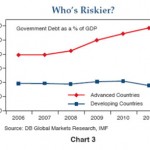
Since it is highly unlikely that the US government will address the fiscal imbalance by reigning in entitlements, the pressure then builds for the financial market to rein in the government’s expansion of continuously growing deficits. Because of the built-in … Continue reading
Posted in The Spellman Report
Comments Off on US Sovereign Risk: Capital Safe Havens