↓
 

The Spellman Report

The Spellman Report, Where the Economy and Markets Meet

The Spellman Report
  • About
  • Blog
  • News and Views
  • Video
  • Investment Management
  • Speaking Engagements

Search Results for: "recent financial news"

Post navigation

← Older posts

Financial Repression: The Unintended Consequences of Saving the Sovereign

The Spellman Report

What’s new has often been lived before, but sometimes it’s not pretty. Presumably that’s what Clarence Darrow meant when he said, “History repeats itself, and that’s one of the things that’s wrong with history.”

It is becoming increasingly clear that developed-world countries will attempt to go down a path followed before by governments facing similar debt loads… and it’s not pretty. In this case it’s not a wartime debt rollover, but a combination of lofty promises made to provide a social net to a burgeoning population demographic. And this follows years of fiscal sloppiness both here and abroad derived from an attitude best expressed in the infamous and thoughtless words of Dick Cheney, “Debt doesn’t matter.” Well, Dick, it does.

With the U.S. and many other sovereign’s debt levels reaching or exceeding the 100% ratio to GDP, governments are in a mad scramble to line up financial resources to keep the debt thing afloat.

Europe (Greece in particular) continues to be the poster child for the illusion that a government can keep itself going by leaning on its citizens and others to create bailout funds, or by changing the accounting, regulatory or legal rules, or by engaging in other funny–money schemes. Europe has just concluded the 16th summit of its leaders in less than two years to solve the Euro debt problem once and for all — and all they do is create more debt (the ESM permanent fund) to solve an over-indebtedness problem.

Some of these efforts have brought a temporary reprieve from financial meltdown, but they do not provide a meaningful adjustment process to regain prosperity or debt sustainability. Basically, the horse is out of the barn. There is now so much debt and so many additional scheduled debt commitments that austerity on the rest of the budget will not contain the debt problem.

It would almost be an amusing soap opera if we, the spectators in the audience of this high-theatre drama unfolding in the daily financial tabloids in both Europe and the U.S., could sit back and enjoy the comedy, but unfortunately the bottom line is the actors in the comedy will soon be passing the hat around the audience — at first for voluntary contributions and later for mandatory contributions to the cause.

Moreover, we the audience will ultimately need to ante up less in direct contributions (whatever form of taxes you care to name), but more so in the loss of our income base and market value of wealth. All of this begins with the redirection of scarce capital to finance governments at terms favorable to the debtor government. When that is not enough, next comes the systemic raiding of banks and private resources to finance government debt.

Given the lack of will by the government actors in this soap opera to stop the entitlement game made by previous irresponsible governments, it appears that we will soon be learning the ultimate cost of attempting to keep the entitlement promise. The promise will not be delivered, but we will go down trying.

The cost of trying is not calculated in terms of the present value of the unfunded entitlement liabilities or in the cost of escalating government debt service that we can directly measure. Rather, the cost will be in the more difficult to calculate income, output and wealth losses as a result of a country’s undersupplied and misdirected capital resources. In the environment of attempting to keep the faith in entitlements, income flows and job growth occur at a diminished rate. The economic engine is stuck in low gear when a higher priority is given to financing the sovereign rather than the private sector.

All of this goes by the name of financial repression, a term that has resurfaced in the economic-financial policy lexicon in the last months and is becoming chic in the financial policy press. It’s a term that I am familiar with in that my Ph.D. Chairman, Professor Edward S. Shaw, along with Professor Ron McKinnon of Stanford University, invented it as an explanation of why the Less Developed Countries were less developed for about five decades. Now we get to view it in living color as the nightly news shows us how it is being applied to and affecting the developed economies of the world.

The idea of financial repression presented to me as a graduate student didn’t resonate then, but it does now as I view it and its side effects. It sometimes takes a while for ideas to sink in, and because history is repeating, I get to watch it live the second time — or the third, or however many times it’s been around. What needs to be understood is that financial repression is the unintended consequence of government efforts to suck private capital resources at favorable terms into the financing of government debt. It could just as well be called economic repression because that is what results.

While the general objective for a debt-stressed government is to induce or coerce the buying of its debt, it also needs the buying to take place at a cost the government can afford — not just zero, but even below zero. This occurs when the real interest rate (the nominal rate paid less the inflation rate) is held in negative territory. The cost becomes negative in real terms when a positive inflation rate depreciates the bond’s real value to a greater extent than interest is paid to the holder of the debt.

To pull this off requires a cooperative central bank to create the negative real rates. It’s been quite amazing how the “independent” central banks — made independent to provide checks and balances to prevent reckless government spending sprees — have been co-opted to play an essential role in financial repression. They do so by providing a negative real interest rate for governments by both targeting simultaneously both near-zero nominal rates of interest on government debt and a positive inflation rate.

Given this perspective it should be little surprise that the Fed has recently extended its near-zero nominal interest rate forecast (target) through 2014 and talk of another round of QE is alive both here and in Europe on top of all the others that have occurred in the last three years. While this cheapens government finance at the expense of the holders of the government debt, it also provides disincentives to save and accumulate capital for private uses, hence our near-zero saving rate.

A government’s central bank is its first line of defense in maintaining its ability to pay entitlements. The second line of defense consists of the banks and financial institutions that are coerced to hold greater proportions of government debt in the name of rising liquidity and capital requirements — but with almost zero nominal rates earned on this sizable asset class, they pay virtually nothing for deposits. Hence the banking system and financial institutions in general are also offering negative interest rates on deposits and are in a state of shrinkage, allocating smaller and smaller proportions of their portfolios to the private sector.

We the people will be the third line of defense as the government crams its debt down the throat of the unsuspecting and the unwilling. This generally takes the form of voluntary programs for debt purchases, as the WWII-era poster above suggests. Later this will be accomplished through a mandatory program, with mandatory purchases in the form of swapping “risky” private assets in an IRA for “secure government debt” to finance a private retirement. This has just occurred in Hungry and Poland, and that discussion has been launched in the U.S. and is contained in the Annual Report of the White House Task Force on the Middle Class (p. 27).

But what do depressing government bond yields do to non-government financial prices? As discussed in my previous post Liquidity and Asset Bubbles: How Long Will the Dam Hold, the lowest interest rates in U.S. history promote a carry trade that finances the purchase of higher quality debt and higher quality dividend-paying equities that investors hope will survive a sovereign meltdown. By extending the time period of its zero interest rate policy out to three years, the Fed reduces the funding risk of the carry trade and ramps it up further.

There is substantial financial buying power to be spread out: the Fed and the ECB’s liquidity transfusions of operation twist, on top of swap financed lending to euro banks, on top of LTRO, on top of another LTRO in the works, and ad hoc ECB direct sovereign purchases, and now with just plain old out-and-out QE3 rumored to be on its way. Furthermore, QEs are also in operation with the BofE and the BofJ and other central banks concerned that capital flight to their currency will undercut their terms of trade. Hence, there is global impetus for central bank buying and money issuance in large numbers as depicted in the accompanying figure.

The equity price run up the last few months is fun while it lasts, but ultimately and fundamentally, if the government interest rate anchor for the financial markets is reduced to a rate that does not reflect its risk, and if further price distortions are introduced into the pricing of equity so that P/Es become transparently unsupportable by fundamentals (if anyone remembers what that is anymore), then expect to see investors seek to place their capital elsewhere.

If the government then attempts to head that off with capital outflow restrictions and more mandatory funneling of capital to the government’s cause, then we are into a full-fledged financial and economic repression. Europe is certainly much closer to that than the U.S., but if there is a buyers strike of government debt here (China has removed itself from accumulating Treasuries), it will eventually repress the economy here as well. We will be no different than the LDCs that self-inflicted decades of pain, as explained by professors Shaw and McKinnon, and history will indeed have repeated.


Dominos: From Financial Crisis to Economic Crisis to Government Crisis

The Spellman Report

The dominos are falling. It’s the modern version of a 1930’s bank run. Since everything is bigger (the leverage) and faster (the computers) these days, so is the downfall in financial prices and institutions.

The lead domino is an asset class becoming untenable. This time around it’s the subprime sovereigns of Europe, whereas three short years ago it was subprime mortgages. Then, as now, it was thought to be a small problem (if we count only Greece) of almost the same magnitude: $400 billion in subprime mortgages that was thought to be contained or walled off. From there you should get the general idea, as the subprime story should be fresh in your minds.

Since the most conservative and regulated institutions hold large proportions of sovereign bonds in their portfolios, the default of the bonds becomes their balance sheet insolvency. The next domino is the withdrawal of the funding from banks by those who lend to them on a short-term basis and suspect the banks’ solvency is compromised.

Since demand deposits, just as the name suggests, are payable on demand, they are the next domino. This funding source exits the banks because of the suspected insolvency. To replace the lost deposit funding, banks borrow overnight from other banks or from “repo” lenders on a collateralized basis. When these sources find lending to the suspect bank too risky, they stop lending and another domino falls.

This is the part when everyone says, “Oh, don’t worry; I’ll go to the central bank to replace the lost funding.” At this stage, the banks complain of “liquidity” drying up but in reality but what is driving their liquidity problem is the market sensing their insolvency problem. The liquidity then flows until the central bank hits the wall and another domino falls. The central bank has constraints, and when the collateral offered is no longer investment-grade as the ECB Treaty requires, then the ECB hits the wall and another domino falls.

Then, borrowing from other central banks (like those of the U.S., U.K., Switzerland and Japan) kicks in as it did three weeks ago. Because the Fed has over-extended its balance sheet, it recently took a pass on net economic stimulus, opting to buy assets financed by selling other assets so as not to further expand its already stretched balance sheet. Hence our central bank as lender of last resort is constrained, it can’t help the economy and another big domino falls.

When these sources no longer provide the liquidity necessary to support the right hand side of bank balance sheets, the bank’s stockholders start to leave in the form of selling bank stock. So the next domino falls. Then stockholders of the banks and other institutions around the world ask their management whether they lent to the hedge funds whose collateralized assets are falling in value. The answer is obviously yes; as we examine the worried look on the face of a very large celebrated hedge fund manager who is pondering what to sell next in order to pay off his leveraged loans and cash out his investors seeking liquidation of their stakes in the Paulson Funds.

So then hedge funds which are larger in aggregate than U.S. banks sell, sell, sell to pay off short-term funding as well as equity owners who want out. This compresses their balance sheets, and all kinds of assets unrelated to subprime sovereigns fall wickedly in price such as gold, and the equity and debt of successful emerging nations.

So another domino falls. This doesn’t diminish these assets’ long term worth, but it sure puts a dent into value believer’s portfolios for now.

The next dominos from there are just beginning to enter the public consciousness. Can this top-down shedding of assets and compressing balance sheets also take down the economy? Well, yes, as all financial institutions are seeking to liquidate assets to meet the demands of their funding sources. So the next businessman who walks into the bank asking to roll over his loan and add to the balance to finance some new opportunity is met with the news that the bank expects payment in full on or before the current loan’s term. This, too, is a big domino as the financial crisis takes down businesses and the economy.

I would like to think it’s over from there, but it is becoming increasingly clear that taking down wealth, taking down the economy, and shutting off business and employment opportunities can easily lead to revolutionary changes in government. This is a very big domino that has hit the streets in Europe and here as well. It will also lead to revolutionary changes in Europe’s governance and institutions. On this side of the pond, the Federal Reserve is likely to be taken to task for pumping up the asset bubble with easy money known as QE2. This could result in changes in the voting membership and control of the Open Market Committee that makes monetary policy decisions. The Fed could quite easily lose its cherished independence, which is perhaps the biggest domino of all.

Whether the financial meltdown goes into overdrive as in 2008 depends on whether systemically important (large) institutions are allowed to fail as with Lehman. That lesson is now clear and the intention is to not repeat that episode says Secretary Geithner. If the government doesn’t have the ability to recapitalize banks and the financial market can’t absorb the rush of additional asset sales from the liquidation of a Lehman sized institution, then the “too big to fails” will be left in suspended animation with an upside-down balance sheet (better known as zombie banking) and glossed over with cover-up accounting. Zombie banks liquidate bank assets slowly but make no loans. At least the liquidation is measured rather than instantaneous.

Of course, only knucklehead governments do not immediately replace fallen bank lenders with fresh entry into banking — a concept known as “good” and “bad” banking. But we have a knucklehead government that doesn’t permit bank entry, so viable banks to finance growing businesses are few and far between.

The financial implosion could end if the central bank really goes over- the-top and purchases stock, either common or preferred, in the commercial banks, restoring their solvency. Our government can’t afford to do this, given its fiscal limitations. There won’t be another TARP. Central bank financing was ultimately the key to making zombie banks in Japan whole again in 2003, after more than a decade of being zombies. We’ve done lots of over-the-top things with the printing press, but at least this one makes constructive sense and is likely the last silver bullet left in the Fed’s and the government’s arsenal. As for Europe, even if Greece is saved their banks need saving and their governments also can’t afford it.

What I have described is not an ordinary recession in which over-investment in some sector causes a lull in new investment and trickles down to slow the economy without taking down the financial system or blowing up the government’s balance sheet. This is, instead, a top down financial shrinkage that takes down institutions, wealth, market valuations, the economy, governments and governmental institutions. How far it goes in Europe and in the U.S. will be determined over the coming years. One thing for sure, this one will go into the history books. The only thing in question is will it be merely the history of prosperity and depression or will it also include the history of government evolution.

US Sovereign Risk: Why the Financial Market Supports Treasuries Despite the Risk

The Spellman Report

Given the debt accumulations projections from Sovereign Risk Part 2 it raises the question of why is it possible that the market is willing to accumulating Treasuries on such favorable terms. As a value proposition Treasuries and the US dollar must be considered to be in a price bubble with short term yields as low as 10 basis points. How can the two be reconciled when the future financing difficulties of the government are so well known and admitted to by The Economic Report of the President, the CBO study and Moody’s conclusion regarding the Treasury rating?

There is a reasonably long list of reasons why Treasuries continue to appeal to the market and much of it does not have to do with the value proposition of the Treasury as an investment. Treasuries as an asset class satisfy a number of objectives and constraints for an institutional portfolio in addition to still having the luster of the asset class that has not suffered a default in the 220 year existence of the US government.

Aside from (mis)perceived lack of risk due the track record which still sway many and we are still in a risk averse environment as long as the Great Recession continues. In addition the institutional demand is strong for often irrational regulatory reasons. First, in an environment of risk based capital requirements for institutions, the Treasury as an asset requires the least amount of capital of the institution. Since institutions are generally operating with cover up accounting and shallow capital ratios, the Treasury has a strong appeal. (See http://lewisspellman.com/videos/ways-it-melted-down-you-cant-handle-truth-1-5). Indeed, as previously indicated commercial banks substantially added to their Treasury holding in 2009.

Another source of Treasury appeal comes from the fact that pension funds have become regulatory constrained to match duration of assets with liabilities especially with highly rated assets. There is a great market scarcity of highly rated, long maturity bonds. Indeed, of the S & P 500 companies only 4 currently are AAA rated hence without Treasuries and government guaranteed debt, pension funds would have great difficulty meeting their high-quality maturity-matching asset requirements. While Moody’s has cleared warned that the Treasury AAA rating would be revised downward if entitlement were not reduced and reduced in the next year or two, we continue to have the market comforting factor of the Triple A rating. However, the UK and Japan have been downgraded in the last year so there is no reason to believe that Moody’s would not similarly downgrade the US but in the mean time the US looks better by comparison and if a portfolio requires sovereigns the Treasuries win by default.

Additional Treasury and dollar demand comes from foreigners who as the result of trade surpluses accumulated Dollars which are typically held as a medium of exchange and store of value in the dollar (and in turn Treasuries) as long as the Dollar is the reserve currency. The Dollar as the reserve currency would seem to come under pressure given the government’s long term deficit and debt problems however, however there are no equal competitors for the US dollar. In 2009, dollar skepticism was in the air and the Dollar came under market pressure and fell 15% against a currency basket. A great deal of the Dollar flight capital turned to the Euro which appreciated to $1.60. However, in late 2009 and early 2010, sovereign risk questions became more immediate in the Euro zone with Greece’s high profile problems and contagion to other Olive Belt countries so the safe currency pendulum swung back to the US Dollar and the US Treasury.

Given the skepticism of the ability of Greece and other Olive belt countries there was sudden widening of the yield spreads of the Euro Sovereign bonds. In a classic flight to quality pattern, the yields on Greek and other Olive Belt Sovereigns rose and the yield of German Bunds declined. This increase in spread with no change in the over-all level of rates is a classic “flight to quality” pattern which indicates that portfolio managers did not shift away from Euro sovereigns but rather sought to shift out of Greek and other less desirables and into German sovereigns raising the yield on for Olive Belt sovereigns but with German yields benefitting as capital fled in its direction.

This was no indication that German sovereigns were now a better credit, but they merely benefitted as capital was institutionally locked into sovereigns and the market sought to redistribute its holdings among the candidates. Much the same happened in 2010 to the Treasury yields as the Olive Belt flight caused capital to land in US Treasuries and drove short term Treasuries yields to all time lows of sometimes less than 10 basis points. Not only did the capital flight from risky Euro sovereign affect the Treasury but the Dollar also appreciated relative to the Euro. Basically the Euro sovereign distress made the Treasury look more appealing at least for short maturity Treasuries at this time.

While these institutional factors account for much of the markets continue support of Treasuries up at this time, some seek a risk factoring of sovereigns. At its most basic level this simply takes the form of asking the basic question of whether this year’s additional debt offerings will be financed by the market. This crude short term test comes down to whether the projected fiscal deficit can be financed this year. With a projected deficit equal to 10% of GDP once again in the US, and with a domestic saving rate of 5% that would get us half way to financing the deficit if most saving were funneled into Treasuries. This is happening in that consumer deleveraging takes the form of paying off bank debt and the banks in turn are expanding their Treasury holdings with the cash proceeds.

In addition to attracting domestic saving, the short term risk test of Treasuries also is viewed relative to attracting foreign saving to the US Treasury. Recently there has been some disturbing news in that both China and Japan the largest two holders of US Treasury debt in late 2009 and early 2010 became net sellers of Treasuries and with contentious tariffs issues being raised in the US Senate it is likely to affect China’s willingness to engage in the Treasury purchases as a quid pro quo for a waiver on retaliation for currency manipulation favorable to her exports.

Lastly, the market examines the inclination of the Fed to support the Treasury market as the buyer of last resort if both domestic and foreign savings is inadequate to finance the deficit. Now that the financial crisis is somewhat behind us, the Fed had made it known that the government must restrict itself to a structural deficit not to exceed 2.5 to 3% of GDP. This was clearly the message from Bernanke’s recent Congressional testimony. One certainly gets the feeling that he would need to be replaced for the Fed to embark on a serious debt monetization.

Budget Spin Control Undressed: Mike Granoff on the Government Financial Report

The Spellman Report

The White House makes projections of government deficits and debt accumulation such as contained in the Budget and the Economic Report of the President. Politicians being politicians thrive on good news and find ways to suppress the less flattering, better known as spin control. The spin control extends to making assumptions that generate favorable projections of future government debt and government debt accumulation so as not to further alarm a concerned electorate as well as the government bond market and financial insurance market (the CDS market) that is now pricing in US sovereign risk. The flattering assumptions for example, relate to economic growth that will provide tax receipts to the Treasury and will seemingly lighten the debt burden relative to income (see Sovereign Risk Part 2).

However, there is some accountability of Budget projections that the below blog by Michael Granof makes clear. There is a Federal Accounting Standards Advisory Board that he is a member of, that applies standards closer to but not to be confused with the Financial Accounting Standards Board that governs business accounting. When the FASAB rules are used some of the missing information from Budgets is filled in but without surprise we still get a general bleak picture of what lies ahead. Apparently, there was less room for verbal spin upon release of the Report so that the Treasury Department chose to draw as little attention to the release of the 2009 Financial Report as possible.

Released to Near Silence, the U.S. Treasury 2009 Financial Report Shows Dire Course

April 12th, 2010 · Opinion · Texas Enterprise · Top Stories · Posted by Dave Wenger

By Michael Granof, Guest Blogger for McCombs TODAY

Michael Granof is the Ernst & Young Distinguished Centennial Professor in Accounting at McCombs. He is currently serving a five-year term on the Federal Accounting Standards Advisory Board. The views expressed herein are his own, not necessarily those of the Board.

If you listen to certain politicians and talking heads you might get the impression that the federal fiscal sky is falling. Unfortunately, unlike Chicken Little, they may be right.

The Treasury Department recently issued the 2009 financial report of the United States government. Whereas there is lots of talk in Congress and in the press about the federal budget, the annual report was released to near silence. That’s too bad, not only because the annual report is untainted by creative accounting but also because its message is too important to ignore.

That message is that the sky is indeed falling.

No Creative Accounting

What is the difference between the budget and the financial report?

Most notably the federal budget is on what is essentially a cash basis. Contrast that to the federal financial report which is on an “accrual” basis and thereby recognizes revenues and expenses when they have their true economic impact, not necessarily when cash is received or disbursed.

As but one example, whereas the federal budget delays recognition of military pension costs until personnel retire and receive their payments, the annual report recognizes them as they perform their service. Similarly, the cash basis, but not the accrual basis permits the government to reduce expenses of a particular year merely by postponing payment of its bills from that year to the next.

These devilish machinations are possible in part because there are no established accounting rules for the budget or requirements that it be independently audited.

By contrast, the annual report is based on accounting principles established by the Federal Accounting Standards Advisory Board. The FASAB is an independent body of nine members, two-thirds of whom have no direct connection with the federal government. The report is subject to audit by the Government Accountability Office, an agency whose independence and integrity is almost never questioned.

To be sure, the accounting principles adopted by the FASAB are not beyond challenge. However, for the most part the criticisms relate to the basic financial statements, those that report assets, liabilities, revenues and expenses, rather than to the report in its totality. The complete report consists of scores of pages and notes, supplementary data and analyses. Data that critics charge are absent from the basic financial statements are almost always conveyed elsewhere in the report.

The 2009 federal balance sheet indicates that the government’s net position (total assets less total liabilities) is a negative $11.5 trillion, 12.3 percent worse than the previous year. But that’s just the tip of the iceberg. That negative balance excludes government obligations for social insurance programs, mainly Social Security and Medicare.

Whether social insurance should be booked as a liability has long been a controversial issue among government accountants.

On the one hand, it is argued that social insurance programs are like pensions. Participants pay into the plan and earn their eventual benefits while they are employed. Hence, both the expense for the programs and a corresponding actuarial liability, it is said, should be recognized during their working years.

On the other hand, some contend, social insurance programs are not – and were never intended to be – pension-like programs. Rather, like other entitlement programs, they are a tax and spend program in which resources get redistributed from one group of citizens to another. After all, when social security was initially established the first recipient, Ida May Fuller of Brattleboro Vermont, contributed only $24.75 but received $22,888.92 in benefits.

Unable to reach agreement as to whether social insurance should be included as a balance sheet liability, the members of the FASAB compromised, and thus, immediately following the balance sheet is a “Statement of Social Insurance.” In the 2009 annual report this indicates that the total present value of estimated social insurance expenditures over revenues is $45.9 trillion.

Hence, simple addition indicates that the total net position of the government is a whopping negative $57.4 trillion.

Similarly, the potential losses from investments in Freddie Mac and Fannie Mae are not included among the government’s liabilities. That’s because these entities are government-sponsored enterprises, not part of the government itself. Still, the report reveals that in an “extreme case scenario” the government could be on the hook for an additional $130 billion to satisfy existing loan guarantees – an amount that unfortunately seems trivial compared to the social insurance obligation.

We Have Been Warned

The message of the annual report is frighteningly candid. In a section of the report entitled Management’s Discussion and Analysis, which is intended to put the basic numbers into perspective, a multi-colored chart is entitled “Current Trends Are Not Sustainable Because Program Outlays Would Persistently Exceed Total Receipts.” (See below.)

Source: U.S. Department of the Treasury

It shows that, in the absence of policy changes, total government costs excluding interest will increase gradually from 19 percent of gross domestic product in 2014 to 25 percent in 2040 and 29 percent in 2080. Not surprisingly, rising health care costs is the major culprit.

Even more telling, another chart shows that if current policies are left unchecked U.S. government debt held by the public will increase from approximately 80 percent of GDP today to 700 percent in 2080 (when, one hopes, your children or grandchildren will still be alive). Correspondingly, per still another chart, net interest could rise from 1.3 percent of GDP in 2009 to 10 percent in 2040 and to 35 percent in 2080.

The federal annual report is 234 pages in length, and though some of the data are technical in nature, much is readily understandable by a layperson. There is virtually nothing in the report that a reasonable person would consider to be politically partisan. Indeed, in key respects the report is not much different than annual reports issued by the Bush Administration.

The message of the report is resoundingly clear. The federal government’s course is dire. Therefore, if, when the history of the current decade is written, it reveals that the American people and its representatives in Congress and the Administration failed to respond to the report’s warnings, then immediate future generations will have no doubt as to where to place the blame.

Is it Risk or Uncertainty?

The Spellman Report

It’s not likely to be news to anyone reading this blog that the US equity market has been consumed by volatility and in a downdraft for the last several months. Given the lags between observing, writing, and publishing a blog, it might already be over by the time you’re reading this, hence amounting to no more than a small footnote in the history of stock market vacillations. 

As distasteful as this downdraft in market prices is to an investor, feel fortunate that you are not in the financial media business when such an event occurs. If you were, it would become your task to find someone to interview who might comment on the risks that have caused such large-scale selling. 

Additionally, you would be tasked with running down sources who could tell you whether the decline in stock prices constitutes a forecast of a recession, or if the stock price decline itself will cause a recession.

To me, the event most similar to our present situation came on October 19, 1987, which was given the nickname “Black Monday.” With a one-day S&P market decline of 23%, it made our recent correction a piker — at least up to this point. But, there are similarities that provide insight into our present situation.

On Black Monday, I was on a trip to Boston for a morning meeting that would utilize real rate financing, after which I scrambled to catch an afternoon flight to Manhattan for a dinner meeting at the Harvard Club, in all its antiquity. I had heard of the market decline while in Boston and otherwise did not know how the market day had ended.

Click to Subscribe Now

I still have a clear memory of walking into the Club to find its members stumbling and mumbling incoherently to anyone who would listen, including me. In my life up to this point, I had only seen mass shock of this sort following the Kennedy assassination, so I began to hope that old Ronnie Reagan was O.K. As far as the stock market was concerned, it took eight months to recover on its own and rebound to new highs.

It did not take long for the media to beat the question of cause and effect to death (as it would do to an even greater degree today). In the mad search for possible causes, it turns out there was relatively little on the economic horizon in October 1987 that would logically have caused investors to flee the market all at once and drive stock prices down 23% in a single day. With little in the way of a large and obvious cause, financial pundits had to use their imaginations to fill the paper with risks to report on. 

As it would turn out, investors had been feeling some mild discomfort due to the effects of exchange rate manipulation by central banks in the post-“Plaza Accord” era. It was a first time central banks agreed to manipulate exchange rates after decades of fixed exchange rates. This economic climate was relatively unfamiliar to not just investors but also to economists and news reporters.

What had happened is that that during Reagan’s first term as president, worldwide capital flowed heavily to the US dollar and hence into US$-denominated assets. As foreign capital flowed in, it caused the US dollar to become more expensive and in turn increased the price of US exports to foreign parties. 

For the US, consequences of the more expensive dollar included a decline in exports and a trade deficit. Somehow, Treasury Secretary James A. Baker secured the agreementof our G-5 allies and trading partners to go along with a plan to cheapen the dollar in order to offset the US trade deficit, at the expense of a reduction in their own trade surpluses. 

This was a benefit to the US economy, but because it was done in the new and unfamiliar environment of currency intervention, it was too much new ground for stock market investors to digest without perceiving it as a risk. A similar situation is occurring today, as investors have not easily embraced the Trump administration’s efforts to seek tariff reductions via trade wars as a benefit to the US economy. 

So overall, the 1987 stock market seemed to perceive the central bank’s effort to cheapen the price of the US dollar in an effort to improve the trade balance as a risk to US stocks (which it is, to some extent, as imported intermediate product would become more expensive). 

However, it was not actually a risk that was being priced, as Frank Knight explains in his early finance classic “Risk, Uncertainty and Profit,” published in 1921.

As Knight points out, what distinguishes risk from uncertainty is that to properly evaluate risk, investors need a means for evaluating the probability and extent of losses due to risk, based on theoretical and/or historical precedents.

This is a matter of course: every day in the bond market, for example, a bond’smarket price is discounted based on the probabilities and the extent of losses in a bond’s purchasing power due to inflation. A history of occurrences — and the corresponding extent of inflationary loss in value to the bond — is necessary for investors to reliably judge and price risk. For inflation and bonds, there is more than a century of observed data, with the connection first being made in by Irving Fisherin about 1927.

Today, the leading issue on the table is the probability that a trade war will reduce economic output, and how that might adversely affect the earnings of traded stocks. No history or models of these outcomes exist, so this falls into the category of uncertainty.

The problem is that there is precious little evidence upon which to judge the outcome, and instead we are left with free-floating anxiety. In that case, those wagering on outcomes typically move to the sideline until they can establish odds.

Actually, we have more than trade wars on the psychologist’s couch these days. Brexit and its effect on the EU (and in turn on the US) are also in the inbox of the odds makers.

And then there is Fed uncertainty: will they or won’t they, once again? There is also enormous political change and other major distractionsin play, such as the threat of impeachment, the transition in leadership of the Department of Justice, and the Democrats taking control of the House of Representatives. In addition to these issues, there are future US debt burdens and other palliatives, such as the economic impacts of the corporate tax cut, the repatriation of foreign earnings, and US investment spending on highways and byways.

While there were new occurrences for market investors to spec out, both then and now, in both cases there appears to be another common factor that could generate a market crash.

Interestingly, part of the blame in 1987 fell on the shoulders of a former professor of mine, who along with a few others devised something called “portfolio insurance.” 

The idea was simple enough: computerized program placing sell orders of assets that are falling in value in the markets. The additional sell orders in turn keeps prices moving downward. At that time it was called portfolio insurance, and today its known as high speed trading,which has already come under review for regulatory changes.

Whatever the uncertainty that got us to where we are today, asset prices — more generally than just stocks — have taken it on the chin. Since we are in an environment that is still generating profit growth for assets that are priced more cheaply in markets, opportunities exist. Cash on cash market yields are now available in a number of areas of the markets. 

That would include dividend-paying common and preferred stocks, oil pipeline, and most especially REITs with yields that generate sufficient income to cover IRA minimum distributions requirements without the need to liquidate principal for some time to come.

If you have questions and care to get in touch with me you can use the e-mail link on TheSpellmanReport.com or leave a message at 512 345-6789 extension 301.

Click to Subscribe Now

Bridge Over Troubled Waters: The Plunge Protection Team at Work?

The Spellman Report
6.2.17spellmanreport, Bridge Over Troubled Waters: The Plunge Protection Team at Work?
There have been many recent references to US stock prices relative to earnings (P/Es) being uncomfortably high. Not in absolute terms, mind you, but relative to historic norms considering the lagging growth rate of the economy and earnings. This inconsistency is being taken as evidence, by some, that there is another “conspiracy” underway — this time by the government’s Plunge Protection Team to raise and then support those higher stock prices.

Well there is a mechanism by which the government’s Plunge Protection Team can support stock prices (see below), but today’s market action doesn’t meet the plunging prices criteria for their involvement. Actually, we have exactly the opposite: upward price drift with relatively low volatility.

This doesn’t mean there isn’t central bank support of stock prices and other risk assets — there is, and it’s epic. But this post is about why and how this support of asset prices, including risk assets, is occurring.

First off, it shouldn’t be news to anyone that we have a worldwide economic system that is plagued with very high debt levels. The concern is not in the absolute level of debt so much as in the debt relative to the income resources needed just to cover the interest. The global debt problem includes not just the developed countries (the US, Europe, and Japan) but also China, as well as most emerging nations.

This growth of debt relative to income creates troubled waters for which a bridge is needed to safely navigate the obstacles.

First, the existence of the debt pressures the debtors of the world, both public and private, to reduce spending so as not to add to their debt overload. This has an adverse effect on the demand side of an economy, emanating from either the public or private sectors or both. For example, we can see the pressures mounting as Congress comes to grips with the size of the Federal deficit, which is acting as a constraint on more spending, which in turn leads to less demand for goods.

Spending less in order to stop adding to debt works for individuals. But if a country were to spend less — let’s say by the government or the consumers in aggregate — it also reduces country income. That is, frugality or austerity (depending on how one views it) can work for the individual because it doesn’t really reduce one’s income.

But for a country it does, and this is the debt trap we are in now. These are the troubled waters of compromised economic growth.

The second problem arising out of excess debt is vulnerability to another financial crisis like the one from 2008. Generally speaking, when there are extreme quantities of anything, an over-supply means downward pressures on the market price of the over-supplied item. And that includes government and private debt.

So this puts into motion a process by which those who purchased and hold the debt become vulnerable to a deterioration in market value. To those owners of the debt, whoever they may be (banks, pension funds, etc.), the market debt instruments are their assets, and if there is too much of it, per se, there are downward pressures on the value of institutional assets.

For the institutions owning these assets, this is a major problem. It can cause the financiers of those institutions (depositors or repo lenders, for example) to give pause and not automatically roll over their funding to these institutions owning the vulnerable debt. Thus, even without a concern for asset quality, the over-supplied debt sitting on the institutions’ balance sheets is a red flag. (Think what happened to the institutions last time around in 2008 when they held oversupplied mortgages.)

As a result, those who fund the institutions’ asset purchases naturally become concerned and start to demure from requests by the institutions to roll over their funding for longer periods of time.

This over-indebtedness creates the fear of declining asset values, and it becomes self-actualizing even if there’s not an actual default on those assets. The trigger is when the nervous funders seek to cash out their funding and, hence, force the institutions to sell the over-supplied assets in order to be able to pay the funders who want out. And selling those assets depresses their price while the line to cash-out gets longer and longer.

The institutions in question include banks of all varieties: commercial, investment, and shadow. It also includes money market mutuals and all asset-backed securities that, by definition, hold the over-supplied debt whether it be government debt, student loans, auto loans, or corporate junk debt.

If you believe this is a matter for only to those in high finance and that you are not subject to this risk, think again. This is the description of a deposit run on commercial banks, savings banks, and credit unions in which the “man on the street” is the funder (otherwise known as a depositor), and that includes you and me.

The policy solution to this problem that visited us worldwide not 10 years ago was to keep asset values afloat, especially when a government has written a blank check to cover the losses to depositors (called deposit insurance) or other Federal asset guarantees such as on mortgage-backed securities or student loans.

So this is a motivation on the part of policymakers not to allow the over-supplied institutional asset values to decline a la the financial crisis of 2008 — particularly if the government has guaranteed the funding. In that case, the short fall becomes a government and taxpayer liability, otherwise known as deposit insurance or other government third party guarantees.

Central banks are the first, second, and third lines of defense against a financial meltdown, but now they have an incentive to foster an asset inflation lest one of its protected banks experiences a deposit run, which would create uncertainty for all banks.

Of course, this motivation for asset support is not expressed, because if the Fed’s concern for asset prices is reflected in a public statement, it triggers the very event they are attempting to prevent. Therefore, a cover-up is in order.

So, in a way, it’s a conspiracy.

As a result, the Fed’s rationale for being in financial asset support mode is couched in terms of helping the unemployed when the central banks of the globe buy, buy, and buy to create the demand equal to the bloated outstanding supply of debt — and in so doing provides support for their prices.

The chart below shows the assets of the major central banks over the last decade (and does not include China and the Emerging Market Countries). The major central banks’ balance sheets have been the ongoing solution to maintaining market values of debt, as their debt purchases have risen by $12 trillion from a base of $6 trillion in 2008. This compares to an issuance of US government debt over the same time period of approximately $10 trillion. So in round numbers, the added demand ($12 trillion) just from major central banks offsets the added supply ($10 trillion) of US government debt.

Now getting back to the “conspiracy” of how that affects equity pricing and things as the market P/E: It must be understood that central banks tend to purchase government debt but that “official” buying of “official” assets bleeds into market support for ALL assets, including risk assets such as stocks, real estate, etc.

The indirect market support for risk assets is a twostep processes. In the first step, central banks purchase “official” assets (government bonds) from private sellers (not the government).

In the second step, the private sellers of the government bonds now has the cash and is looking for a replacement asset that, for whatever reason, they deem to be more desirable than holding the “official” asset that it just sold to the central bank. So the new, at-the-margin financial buying power spreads out and elevates the price of risk assets across the board, including in foreign markets if the acquisition of assets wanders there.

All this is a long way of saying that under the cover story of providing jobs for the unemployed, the Federal Reserve and most other central banks around the globe are creating higher asset prices and providing private sellers of official assets with the cash in-hand to purchase risk assets and, therefore, are generating an elevated P/E ratio for stocks.

The same can be said for the market valuation of real estate. That is to say, risk assets are substitutes for official assets. Indeed, the private portfolio managers sell off official assets to the central banks because they think they found a “bigger fool” who will pay more for them.

But that’s not the end of the “official” buying of “official” assets because when some private managers direct some of their replacement buying to foreign financial markets as indicated above. This elevates risk asset prices abroad as well. It also drives foreign currency prices upward relative to the US dollar because the buying moves through the foreign exchange market to reach the foreign asset.

In turn, typically, the emerging market’s central banks then intervene in the currency market to lower its exchange rate to the US dollar to where it had been prior to the foreign financial inflow to its market. This re-setting of its currency allows them to continue enjoying a trade surplus against the developed countries.

This link to the foreign central bank reaction is sometimes called “The Currency War.” Their purchases of US dollars in the foreign exchange market, paid for with their own currency, resets export competitiveness. The US dollars purchased in this transaction are noted on their balance sheets as foreign exchange reserves, but there is no reason to hold US dollars that do not earn income. So it has become the standard for foreign central banks to turn around and purchase interest-bearing US dollar debt with newly purchased dollars. Some even purchase US risk assets with the dollar proceeds, including corporate stock.

This additional market support from emerging market official buying amounted to another $6 trillion over the same time period considered above. In essence, there is a “money supply multiplier” in that the developed countries’ monetary expansion causes export-reliant countries to also expand their central bank money and purchase US assets. So the developed world central banks expanded by $12 trillion, and the EM central banks expanded their US assets by an additional $6 trillion.

The bottom line is that excess country debt has become targeted by central banks because they have a vested interest not to allow their bond prices to decline in market value. This, in turn, supports risk asset prices because risk assets are substitutes among investors. These risk asset purchases create higher equity prices and relatively stable P/E ratios irrespective of the changing fortunes of the underlying corporate earnings and the growth of those earnings. When a company’s earnings disappoint, central banks do not panic and sell, sell, sell. If anything, they are motivated to disallow a price correction and intensify their buying.

In essence, central banks have been building bridges over the troubled waters of excess debt, slow economic growth, and the vulnerability to asset price meltdown.

Thus, those US stock market mavens have good reason to be wondering what in the world has happened to their understanding of market P/Es. They are no longer consistent with what one would historically expect from a slow growing economy.

It’s indeed difficult to relax as an investor when you know you’re crossing troubled waters. The government has built bridges for us to cross, but those bridges are producing high P/Es that are out of line with the underlying fundamentals as we used to know them.

Hence, an excess debt environment creates pressures for austerity and low growth and puts the central banks in the unseemly position of indirectly supporting all asset prices and using a smoke screen to do it (we are here to save the unemployed). So as the mavens suggest, there is a mechanism at work to support risk asset prices, but it’s not the Plunge Protection Team… though they will likely be called in if the bridge doesn’t hold.


*The Plunge Protection team is the name given by the Washington Post to the government group that first acted in l987’s flash crash. It now has authority to intervene in the stock market. There are four voting members to do so: the Federal Reserve Chairman, the Secretary of the Treasury, the Chairman of the SEC, and the Chairman of the Commodity Future Trading Commission. In order to intervene, it requires a vote of at least three members and the approval of the president. The method of doing so is typically for the Federal Reserve to lend or fund an investment bank asset purchase of stocks to be wound down at some future time when the prices have been re-established. This loan obligation is annulled to the extent that losses might occur.

Negative Interest Rate Neverland

The Spellman Report
For any good or commodity, if supply increases and there are too few takers, the price will fall.

If supply increases further and demand is still low, prices can fall all the way to zero.

If supply increases thereafter, and there are still too few takers, the supplier can offer a cash incentive to those willing to take the accumulated goods off their hands.

This is a negative price, so it turns out that zero is not a lower-bound price for anything.

The implication for the supplier is that the good generates negative revenues and earnings, so doing business at negative prices dissolves the supplier’s net worth. Offering products at negative prices is not a good business to be in, and if you are, you won’t be for long.

As absurd as it might seem, this has become the business model for banks in countries that are persevering under negative interest rates, primarily in Europe and Japan — and the US is not far off.

Banks and other financial institutions supply credit within the credit markets, and if there is great supply and soft demand, the interest rate (as the price of credit) can fall to zero, as in the example above.

The US and most developed countries have been at the borderline zero price of credit since the Great Recession. But it turns out that zero is not a lower bound in financial markets either.

In a sense of desperation, the European Central Bank (ECB) and the Bank of Japan are pushing the interest rate into negative territory because they are supplying credit at a negative rate to their governments and banks. That is, they are offering the borrower a zero interest rate and, in addition, paying the borrowers to borrow by requiring less repayment for the funds loaned.

So, given the need for financing ever-expanding government debt accumulation, and being scarcely able to afford its already existing interest carry, the interest meter for government borrowing goes into negative territory thanks to central bank generosity. This means governments receive more cash with each borrowing than they are required to pay back on the bonds originally purchased by the central bank.

And those terms are also being extended to private borrowers by their banks.

From the central bank’s point of view, negative rates are in vogue because they seemingly kill two birds with one stone: First, they are seen to revive a weak economy (if only the economy behaved as in Keynesian textbooks) and second, it reduces the government’s interest carry, which is great news for debt-strapped governments.

But think what that does to the lenders who are caught in the middle. Earning a negative interest rate on their assets is a net cost for lenders, so instead of receiving investment income, they are instead subsidizing borrowers.

Hence, negative interest rates are an unlegislated wealth transfer from lenders to borrowers, something, no doubt, The Bern would approve of.

In this upside down world of negative interest rates, you might ask why banks lend money with the certainty of getting less in return. This is compelled to some extent via bank asset regulation and central bank pressure to hold government bonds and deposit at the central bank at negative interest rates.

The net of it is that lenders are resisting as bank shrinkage is taking place and bank capital is being run off the books — and the equity market, understanding this, has marked down European bank stocks by 25% since the beginning of this year.

This is a financial extremum, and it doesn’t just undermine banks.

Banks are on the pathway to insolvency, and the same calculus affects all financial institutions that generally live on investment income. In addition to banks, this includes: savings banks, insurance companies, pension funds, endowment funds, and a variety of trusts (both government and private), all of which are being force-fed very low and even negative returning assets.

So you should now see the larger picture of what’s unfolding before our very eyes.

Low and negative interest rates have become the new means to subsidize broke governments and broke businesses with debt outstanding.

Now then, why have central bankers (Draghi of the European Central Bank and Kuroda of the Bank of Japan) recently renewed the pledge for yet a deeper plunge into negative interest rate Neverland? And Yellen is studying it.

Negative Interest Rate NeverlandIs their loyalty to government subsidization above their responsibility to their own central banks’ balance sheets and the commercial banks they regulate? Or are they fools who have been seduced by Keynesian central bank ideology in which lower interest rates are seen as always better for the economy? And that includes Ben Bernanke.

There is a mindlessness going on ­— a failure to pay attention to the blatant damage to financial institutions that investors in bank stocks more clearly see. Where are the thinkers who can think beyond the dusty textbooks of the post-WWII era in which lower interest rates are applied but fail to result in the usual positive multipliers of bank credit, investment expenditures, and job creation?

Moreover, do the central banks — responsible for driving the negative market interest rates — warn the governments that all stripes of lenders will not be able to survive on such low rates on invested assets and, furthermore, expect they will come knocking on the door for major bailouts that cannot be afforded by already debt strapped governments?

This is the road we are on, and it’s a road that leads to promises made and never delivered by commercial banks, by insurance companies, by pension funds, by saving banks, and by trust funds.

When citizens come to realize that their bank deposits or pension fund payments or insurance annuities are worthless pieces of paper, will they not take to the streets in anger? From there, will not the military be called in to contain the destructive anger of its citizens and, in turn, suspend statutes and Constitutional law and place the country under a military dictatorship? It’s happened before — not in the US, but in many places in the Americas. The alternative would be to merely fire up the printing presses and satisfy those private obligations with more printed money.

So when the history book is written, who will be seen as the villain for devising negative interest rate Neverland? Will the mad genius be seen as a Treasury official of a broke government seeking an interest cost subsidy, or will it be the misguided central bankers for being enablers with their zeal for Keynesian orthodoxy?

Those are the issues and stakes involved. However, there is a positive way out, and that is for the government to change the economic environment (via regulation, taxation, or by winning the globalism competitive battle as a national goal). Sufficient economic incentives and the elimination of barriers can bring about an environment in which businesses are born and prosper and become viable borrowers and employers that can pay off loans at positive interest rates as in the good old days of yore.

These changes are within the domain of the government — not the central bank — so the upcoming elections are of extreme importance to the future of the economy, financial institutions, and the government as we know it.

Incenting and allowing businesses to be able to borrow and repay with positive rates needs to be the new operational objective of public policy. No more, “Let’s reduce the interest rate, even if already negative, as long as there are some remaining unemployed.”

Central bankers stuck in negative interest rate Neverland are naively undermining the very foundation of governments, retirement promises made, and even democracy in the process. This is darn profound stuff and well beyond being merely a Keynesian fix that has been overcooked so that it generates major adverse side effects.

The only constructive thing left for central bankers is to stand up in unison and in public and let the government know that they have done all they can and the ball is in their court. Only the legislative and executive branches can change economic incentives and remove impediments to business success so that business borrowers are once again willing and able to pay positive interest rates.

Sign up to receive the Spellman Report. Bracing financial and economic insight. Now with free delivery!

Click to Email Dr. Spellman

Country Debt Enablers and the Greek Conundrum

The Spellman Report
For a country such as Greece with little penchant to tax and a greater penchant to spend, financing its fiscal deficit is an ongoing chore. But when it comes to financing those deficits, governments have tricks up their collective sleeves — ones not available to the private sector.

What makes it relatively easy is that most government debt “sales” are not a sale at all. There is no counter-party buyer that is able to judge the value of the debt being accepted into its portfolio and price it accordingly. Rather, government debt placement tends to be crammed down onto some balance sheet, either private or public, rather than “sold” on a market.

Put another way, governments seek to eliminate the market test and, as a result, their debt is placed at yields that doesn’t reflect the risk that a market would ordinarily require. This accounts in part for the trivial “market” yields on deeply indebted government debt across the world. For example, for ten year durations, Spain and Italy’s government debt yields are well those of the U. S. which themselves are suppressed.

This ability to cram debt down cheaply enables the accumulation of government debt to the point that the only deterrent to doing more so has become the willingness to tax sufficiently to be able to pay the suppressed interest cost. And when that market test can’t be met, all hell breaks loose — as it has in Greece.

Here is how the government debt enablers work:

The first trick is for governments to encourage its citizens to regularly purchase government debt via a “payroll savings plan.” That is, convert private savings immediately into non-marketable government debt much like the U.S. did with large-scale Savings or War Bond programs during WWII.

These programs are initially voluntary but morph into mandates. For example, during WWII, the U.S. government required 100 percent compliance among employees of defense-related businesses — to participate, or risk losing your government contract.

During Vietnam, a more egregious cram-down occurred when the arms most easily twisted into participating in “voluntarily” government debt purchases were those of the soldiers themselves. Those conscripted to military service bore the dubious distinction of both fighting and financing the war via mandatory saving bonds in lieu of pay.

But “voluntary” government efforts to lock into private savings are not just for wartime. Recently, for example, the Middle Class Task Force of the Obama White House proposed to “strengthen middle class finances” via voluntary savings funneled into a “Safe Investment Choices” program (p. 25). Of course, with the government acting as your investment manager, to them there would be no conflict of interest in funneling your private savings into wonderful “riskless” U.S. Treasuries, which is what was proposed.

Much the same regularly occurs for government “trust” funds, whether they are part of social insurance or for other future services such as Medicare, Medicare, or the highway trust fund.

From there, public capital markets are tapped though the sale of government bonds but with either a whiff of coercion or special enticement, so the market test is deeply biased.

For example, a factor in the marketability of government bonds at yields attractive to the issuer depends on the currency in which the bond’s payments are denominated.

From an investor perspective, Greece’s bonds — payable in Euros — are considerably more desirable than if they were denominated in Greek Drachma. This is because the Euro’s value is supported by the demand for Euro currency to purchase the goods of more successful European exporters. However, the ability to piggyback off the relative strength of the Euro currency to sell Greek bonds doesn’t require Greece to remain in the Euro currency. Countries, for example, regularly finance their debt denominated in the U.S. dollar without being part of the U.S.

So the importance of remaining in the Eurozone for Greece is to court the purchases of their debt by the European Central Bank (ECB) and other Euro government’s intent on defending the benefits of European economic integration as a means to provide disincentives for European conflicts, as occurred in the past.

Another consideration regarding a government’s ability to finance its debt and contain its cost is the credit rating of its sovereign debt. Hence, governments regularly pressure private credit rating agencies to issue pristine ratings whether or not their debt is pristine. Here, too, Greece benefits from being in the Eurozone.

Getting the Euro sovereign ratings under control is important because the ECB purchases of country debt require investment-grade ratings. When it appeared that private rating agencies would not deliver the necessary investment-grade ratings, the ECB contemplated creating its own rating system to produce whatever rating it wanted.

Apparently a way has been found to elevate Euro sovereign debt ratings because, as the ECB notes, Euro sovereign debt ratings have seen a “persistent upward trend for counties with weaker fiscal fundamentals.” Clearly, ratings are being manipulated to Greece’s and other countries’ benefit to allow ECB purchases.

But there are more tricks in the tool chest to sell government debt. When sovereign debt can’t stand on its own two feet and be sold in amounts and affordable yields to finance a fiscal short fall, then governments must get more creative. And they do.

Under the guise (or, rather, the subterfuge) of insuring the “safety and soundness” of financial institutions, government-styled financial regulation requires those institutions to purchase and hold government debt as a “riskless” asset — which, ostensibly, protects the investing public.

The way this is done is to define general categories of assets that financial institutions must own — a requirement that is virtually only met by government bonds.

For example, “risk-based” capital requirements motivate financial institutions to include a larger proportion of “riskless” government debt in their portfolios, which allows banks to operate with less capital. This mutually convenient arrangement (facilitating government debt issuance to banks that are thus able to reduce its capital requirement) at this stage of the Greek game is haunting bank depositors.

They see the banks holding overly generous amounts of wobbly Greek government debt and (correctly) fear the banks don’t have the assets left to make good on their deposits. This is what led to Greece’s bank deposit runs, causing depositors to get in line and withdraw their money as quickly as possible. In these circumstances, the government deposit insurance guarantees that would supposedly cover their losses are vacuous, which further intensifies the panic.

The need to provide the cash to feed the bank deposit run from Greek banks has been funded via emergency “liquidity” loans from the ECB, though the banks have now run out of eligible assets to pledge as collateral against these cash loans as required by ECB rules. As a result, the banks have been in the process of pilfering cash held in individuals’ private safe deposit boxes and replacing it with a bank IOU.

The next step of obtaining other people’s money to keep the government afloat is for governments to borrow from each other. For the U.S., this is relatively easy because the U.S. dollar is still a reserve currency, and those foreign governments that wish to hold foreign exchange reserves translate their dollars into interest-bearing U.S. Treasuries. But Greece is not equally fortunate. Its bonds don’t qualify as a foreign reserve.

So in the category of borrowing from sovereigns, Greece has had to lean further on the IMF, the EU, and the ECB to (once again) forgive past debt and (again) refinance the rest on cheaper terms and longer durations and to seek additional cash. But it’s clear with Greece’s economy laboring to carry its existing debt that additional debt would no more be serviced than its past debt obligations. Greece is beyond the “bang point” — the point at which the debt prevents the economy from attaining a growth rate sufficient to generate needed tax revenues to service the interest on existing debt.

Having run out of resources and lenders, the issue is this: Is it in the interest of the Eurozone to keep Greece afloat? On this matter, Greece has resorted to upping the ante by threatening to ally itself with the Russians, playing off its strategic geopolitical position at the southeast corner of the Eurozone. It’s Europe’s first line of defense. This is perhaps what has caused some sentiment within the Eurozone to continue supporting Greece, but the amount of tribute is not trivial. The forgiveness of a portion of the 186 billion Euro debt and an additional 86 billion Euro loan have been discussed.

The alternative for Europe, which is growing in favor, is the therapeutic value of finally saying no to additional Greek financings. This would mean absorbing the default on 186 billion Euro of loans made to Greece and to cut Greece off from further Eurozone or ECB borrowing. Cutting off access to the Euro currency and ECB loans would force Greece to return to its own currency. This has been cleverly dubbed “Grexit,” and would result in Greece providing banks with Drachma to satisfy bank deposit withdrawals.

By cutting off additional financial assistance to Greece, the goal here would be for Greece to serve as a model of what happens to governments whose penchant to spend exceeds its penchant to collect taxes, for which Greece is not alone.

Ironically, this tough love is in Greece’s best interest because with its own currency, Greece can make its olives, shipping, tourism and anything else as cheap as it wishes for the global markets. By also defaulting, this would greatly diminish the taxes needed to pay interest and principle on the mountain of past debt.

The Catch 22 is that Greece would need to run a balanced fiscal budget even if it were to be debt free (via default). That is, government spending in the future would be limited to tax proceeds because the market would not touch Greek debt denominated in either Euro or Drachma for years to come.

So the Greek endgame is as follows: unemployment of 25 percent, negative economic growth four years running amounting to a depression, a private banking and wealth meltdown, significant emigration of its youth, who face a 50 percent unemployment rate, and a likely need to go back to a post-WWII square-one to reestablish its economy based on its own currency while living on its own resources. This has become Greece’s fate for debt overindulgence.

But if Europe offers more debt assistance, Greece’s debt load only mounts. As a consequence, Greece will be worse off because it is well beyond the “bang point” — the ratio of the country’s debt to income is rising to nearly 200 percent given the very recent collapse in GDP. And as a consequence, European lenders have almost no chance of collection.

Upon reflection, Greece’s switching to the Euro currency in 2002 only facilitated its ability to borrow more than it could handle and ultimately begot greater pain and suffering. Not much different from private parties that leverage off of connections and overdose on debt and end up with lower income and a cram-down of assets when bankruptcy is reached.

Will Greece’s debt demonstration project influence populations not to elect populist leaders who are ultimately unable to deliver as promised and accept the adverse consequences from trying?

Or will they go further left and be unable to finance themselves any longer — even when using their tricks of the trade — and seize the last remaining sources of private wealth and party until they, too, are spent? We shall soon see.

Sign up to receive the Spellman Report. Bracing financial and economic insight. Now with free delivery!

Oil Boombustology

The Spellman Report
boombustologyIt’s long been in the DNA of economists and market observers, going back at least to the Austrian School of Economics, that when boombustology_2money growth outpaces the economy’s growth, booms are created and so are busts: Boombustology, as coined by Mansharamani of Yale University.
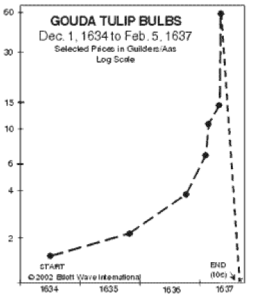

Certainly quantitative ease as practiced in serial form by today’s central banks fan that concern, but for the most part, the sentiment of central bankers, politicians and the market seems to be “please let there be a boom” and we’ll dodge the bust.

There are all kinds of booms and busts. Some are of a benign form called behaviourism. They are born of the belief of ever-increasing prices. Tulipomania during Holland’s seventeenth century was a classic. Though it might not carry an entire economy into excess but the rise and fall of tulip bulb prices surely redistributed wealth.

But some booms involve financing to purchase the item that is booming whatever it is. In that case lenders also have to buy into the boom to make it happen. When the item booming requires industrial equipment to produce it, the economic ripples become far reaching.

The boom mood creates over-building of the capital goods and eventually, the oversupply of the booming item whether we call it tech, housing or commodities. Then, the rising price of the item that precipitated the borrowing and building turns into a free-fall of prices, borrowing and building. There follows an air pocket of demand for the capital goods in question which can then become a generalized demand suppressant and a financial bust.

The lethal combination of reduced demand and over-supply brings into play all the D Words: deflation, default (on the financing), depressions if wide spread and possibly devaluation of the currency, if capital flows to safer ports of call.

Certainly the Great Recession was deep and long not just due to the overindulgence of borrowing and home building but also the permanence of the physical structures left behind that creates a following air-pocket of demand in some places called Ghost Estates. boombustology_3That is, the durability of the over built real capital determines the duration of following depressed demand and soft prices. And this condition continues and defines the duration of the bust as long as the excess supplies are a silhouette on the horizon as shown to the right.
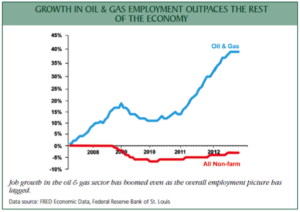
In contrast, was the boombustology of over-built agricultural capacity during World War I to feed a world at war. At the war’s conclusion, Europe went back into production and this expansion of U.S. agricultural capacity created a supply glut in the commodity markets when Europe went back into production. But given the short life span of the crop and the ability to cut back production, the US deflationary depression of 1920-21 that followed was short, sharp and self-correcting.

In today’s post Great Recession environment, fear still persists that the economic ship has not been righted. The duration of a housing bust has been long given the duration of the over-built houses that still dot the landscape in some places.

Central banks are reluctant to take their foot off the proverbial gas pedal and, instead, push the pedal to the metal. And they, still with faith in the Keynesian multiplier, apply ever-cheaper credit (if that is any longer possible).

So where has the money induced boom arising out of the central banks QEs been hiding? To pick up the trail, all one needs do is follow the deflating prices of what is over-built. That leads us to oil, and much the same can be said about commodities in general, especially in the emerging nations.

During the boom phase in the U.S., oil drilling and boombustology_4extraction have been highly instrumental to the U.S. cyclical recovery.
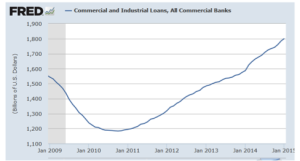
The oil boom didn’t quite take the overall U.S. to a giddy boom, unless you were in Texas or North Dakota or a few other states but its contribution to spending of $300 to $400 billion per year has been the difference between a 2 percent real growth rate and an economy being dead in the water.

Furthermore, as reported by the Manhattan Institute, the economy’s employment growth has been highly concentrated in the oil and gas industry (with other sources of employment growth barely moving the employment needle).

As it turns out, the shale oil industry mainly via the energy investment banks of the region financed over $1 trillion — or an amount equal to approximately 40 percent of Fed-provided liquidity during the Great Recession.

Bloomberg reports that there was $353 billion of IPO in the industry, $286 billion of joint ventures, boombustology_5and $786 billion in lower rated bonds financing this capital intensive undertaking.

Now the oversupply of oil from their success has turned against the drillers. The U.S. marginal increase in oil and gas production to global supply along with generally softening economies in the developed world has caused oil prices to decline in the neighborhood of 50 percent. This boom is now in the bust phase, and additions to production are in retreat.

This represents a world of hurt for the investing entities (generally small firms) and their employees as well as those who hold the energy securities in the form of low-rated bonds or commercial bank loans. Fortunately, the amount does not threaten the mainline financial institutions that hold only a small portion of them, so the financial bust is confined but the physical remains of the boom are silhouetted on the landscape as shown above.

But there is a silver lining to this boombustology. For one, the active life of a fracked well is in the neighborhood of two years during which time 90 percent of product is extracted. The short duration of the income stream from fracked wells allows for a smoother adjustment on the downside and re-fracking will only continue if supported by price increases.

But more importantly, the 50 percent price decline for energy which is used by all other sectors of the economy is provides a large cost savings that is equivalent to a tax cut. Moreover, for the corporate sector, the cost savings represent an increase in net cash flow and higher profit margins and hence broad market support for both stocks and bonds.

But the real issue is will the economy shift gears and sustain the growth of recent years in the absence of an oil thrust? The now-50 percent increase in bank lending to commercial and industrial uses since the bottom of the Great Recession in 2009 along with the “energy tax cut,” suggests that the usual mechanisms of monetary policy are beginning to work to sustain economic expansion beyond oil and commodities.

There are all kinds of booms and busts, and this one could well have a silver lining of generalized higher income after energy costs across the landscape, without a generalized financial meltdown. All in all, the oil and commodities booms and lower prices, even with their industry losses have a net positive effect on economic growth, all things considered.

So, on the spectrum of booms and busts this one will likely be more in the category of the self-limiting agricultural deflationary depression of the early 1920s than the housing boom and bust of recent memory.

Indeed, it has been sufficiently underway to cause the Fed to state its intention to end its quantitative ease. Furthermore, now that there is a stated intention to shift to a monetary tightening, it raises the question of what is left of growth in the US economy without oil expansion? The oil and commodity bust leaves us with a tilt toward deflation and an expansion that remains to be seen.

Sign up to receive the Spellman Report. Bracing financial and economic insight. Now with free delivery!

Goodbye to the Robinson Crusoe Bond Market

The Spellman Report
image003With the U.S. economy having achieved lift-off momentum, the Federal Reserve has ended, at least for now, large-scale bond buying — better known as quantitative easing. Furthermore, the Fed is taking a big gulp and is working up its collective courage to move to interest rate “normalization,” if anyone can remember what that is.

The thinking is that by merely removing the Fed’s large-scale demand for U.S. Treasury bonds, those prices would revert to whatever private buyers will sustain. And with less demand and lower prices, we would get to the correspondingly higher market interest rates. If so, this would be the normalization of rates on autopilot, as no further Fed action would be needed.

That intuition is so strong that a recent Bloomberg survey of economists showed they forecasted not just higher interest rates for 2015 but also that the 10-year T-Bond yield would rise from its year end lows of near 2% back to the 3% level as it was in the beginning of 2014 (shown below).

crusoe1Moreover, not only was this the economists’ consensus, but all participants forecasted higher rates in defiance of the multi-year downward trend, including last year. It is indeed a rare event when economists’ forecasts are not merely a trend extrapolation but rather based on deeply ingrained training and historical experience.

The intuition behind this forecast is, no doubt, based on the classical idea that absent a Fed intervention, market demand rests solely on the shoulders of motivated savers and with the bond sell-side being dominated by businesses that offer bonds up to the point at which their borrowing cost is just supported by investment returns to real capital.

For the sake of argument, let’s call this the Robinson Crusoe island world of finance. It’s quaint, uncomplicated by government actions and constraints, and all bond buyers and sellers are domestic investors. It is the veritable island economy without a central bank.

However, with the advent of globalism, government buying and selling, and regulatory manipulations of all sorts, market-determined interest rates have moved to a new setting. With the elimination of capital barriers, the global financial industry can now move capital across borders for many purposes and reasons and, in so doing, move U.S. financial prices. Of all markets that are not islands, it would be the U.S. Treasury bond market that is still the main holding for other countries’ external reserves and global investors’ go-to asset.

The U.S. 10-year Treasury bond is nearing a 2% yield, and while that is very low both in absolute terms and by historical comparison, it is much higher than similar 10-year government debt in a host of countries that matter.

With Germany at 50 basis points, Switzerland and Japan at 30 basis points, and even troubled Spain at 60 basis points, these countries make the U.S. 10-year T-bond’s 200 basis points very appealing, especially when the U.S. dollar is appreciating against other currencies.

And then there have been institutional developments and a regulatory framework that influences asset choice. Accumulated consumer savings now reaches the demand-side of bond markets via pension funds, banks, wealth managers, and insurance companies where interest rates reflect many categories of private risk. The one that stands out most is the fear of deflation taking place in Europe and Japan and with falling oil prices in many other places as well. This biases the demand toward fixed rate financial contracts in the strongest currency.

Bingo, dollar-denominated Treasuries win again.

And then there are other contortions to market demand for Treasuries when fearful regulators weigh the default risk of different assets in an institutional portfolio and assess a charge in the form of risk-weighted capital. And, as you might have guessed, U.S. government regulators assume U.S. Treasuries are absolutely riskless and, as a result, no institutional capital need be set aside for owning Treasuries as compared to private debt.

Well, the recent push for more stable and capitalized banks suddenly makes the U.S. Treasury asset class more desirable for regulated institutions even at extraordinarily low interest rates because U.S. Treasuries provide capital shields in addition to their puny interest rates. As a result depository institutions have added over $120 Billion to their portfolios in the last three years.

And then, as discussed last month, there are the central banks of the rest of world. They are lining up to buy U.S. dollars (and in turn U. S. Treasuries as a foreign exchange reserve) with their own printed currency. This is a bi-product of the “currency wars” for the purpose of depressing the relative value of their own currency in order to recapture lost global exports.

crusoe2

Just behind the official foreign government purchases are the foreign private investors that are sucked into US dollar assets as a result of the twin appeal of higher U. S. yields and the US dollar appreciation that is occurring relative to 31 currencies. None of this was ever seen in a Robinson Crusoe bond market.

And this phenomenon is likely to kick into higher gear shortly as the European Central Bank (again) reassures its constituents that it will have a QE of its own. It will be directed to Eurozone Sovereign bonds in the first instance, but with Euro domestic yields already so puny, the expectation of a Euro QE is already causing private investors to redirect their wealth away from Euro investments into higher yielding, dollar-appreciating U.S. Treasuries.

As you look up and down the line-up of players and motivations, interest rate normalization will not likely take place by the Fed simply sitting on the sidelines of the Treasury bond market. There are too many other sources of Treasury demand in this divergent, deflationary, regulated economic world causing T-Bond demand to wash up on our shores. Rising rates attained on autopilot, as a result of the Fed’s ceasing to be a buyer of Treasury bonds, will not be enough.

So then if rates were to return to historically normal levels, it’s likely to require not just a hands-off autopilot approach by the Fed but also that it enter the market as a seller of U.S. Treasuries (and if not Treasuries, then something else). That would be a reverse QE, if you will.

And it’s possible that the Fed doesn’t have enough 10-year Treasuries on its balance sheet to sell to drive the price downward in the face of these motivated foreign buyers. But it does have a larger supply of shorter dated Treasuries that can be sold. Additionally, by raising the rate that it lends to banks, it can drive short rates higher and pull some private demand out of the long-dated Treasury market, effectively leading to a yield curve flattening.

In general, it’s a good bite easier for central banks to drive bond prices upward by turning on the printing press and buying something in large enough quantity so long as they do not run out of paper and ink. But to directly lower prices of a financial asset, it needs a sufficient inventory of the item to sell.

There are other manipulations possible to push rates higher: the Fed could raise the cash requirement of commercial banks to take bank-allocated funds out of the treasury market and even force commercial banks to shrink their balance sheets. But this runs counter to all their efforts during the Great Recession and seems unlikely.

And then there is the new, interesting weapon in the Fed’s arsenal to raise rates: sell Federal Reserve debt. That would be a refinancing of the Federal Reserve’s liabilities side of its balance sheet. Sell Federal Reserve bonds that are paid for by Federal Reserve Notes (cash). But does the Fed have the statutory ability to sell Federal Reserve debt? Well technically no, but it has been engineered around to functionally do so.

The Fed has entered the “Reverse Repo” market, selling claims collateralized by its U.S. Treasuries holding, of which it has an abundance on its balance sheet. This end-run provides the same result, and the Fed has been running about $200 billion as an experiment of the technique. Allowing the Fed to issue bonds or interest-bearing debt is a novel idea to suck some of the cash out of the system, and it has finally come to fruition. In this complicated global world, it needed an additional instrument of market control.

So whether or not the market self-corrects to the Fed’s interest rate target, it can still achieve its objective. But it will not be Robinson Crusoe on autopilot.

The interest rate environment is not what it used to be in the good old days of a closed country home central bank monopolized game. Now there are other central banks effectively creating monetary policy in U.S. markets.

Achieving policy objectives in a global financial system is a far more difficult, multi-faceted problem when foreign flows, both private and governmental, offset the domestic policy dictates. The Fed is no longer all-powerful over U.S. markets.

Slow or chronically weak economies with deflation and with foreign governments hell-bent on achieving export share are causing financial spillover into the U.S. market that would be difficult to offset, leaving the future course of longer maturity Treasury yields a major question. Rising rates would depend on how determined the Fed is for normalization, even if it has to sell a lot of something to mop up excess currency.

Welcome to the Brave New World of domestic policy constrained by open global financial markets. Robinson Crusoe would hardly recognize it, and for that matter, many Fed Governors don’t recognize it either.

Sign up to receive the Spellman Report. Bracing financial and economic insight. Now with free delivery!

Post navigation

← Older posts

Receive The Spellman Report Monthly for Bracing Economic and Financial Insight


Click to Subscribe Now

Follow The Spellman Report

Click to Email Dr. Spellman
Tweets by spellmanreport
Lew Spellman

Lew Spellman is Professor of Finance at the University of Texas McCombs School of Business. The Spellman Report seeks to interpret current and future trends in the economy and financial markets from the perspective of history, theory and policy.

Other Commentary

Frank Beck, Beck Capital Management
Bill Gross, Janus
The Grumpy Economist
Jeffrey Snider, Real Clear Markets
Ben Bernanke
Hoisington Management, Economic Overview

RECENT POSTS

  • The Goose that Laid the Golden Egg and Nobody Wants It
  • Is it Risk or Uncertainty?
  • The Recovery from the Great Recession is over. What Happens Next?
  • The Anniversary Blues
  • The Trump Tariff Offensive
  • The Inflation Divide
  • The Debt Boomerang
  • At the Cross Roads of Money and Inflation
  • The Bitcoin Mania
  • Déjà Vu All Over Again: Today’s Suspicious Looking Stock Market

POSTS BY TOPIC

Disclaimer: The Spellman Report is not an offering for any investment. It represents only the conclusions and analysis of Professor Lewis Spellman. Any views expressed are provided for information purposes only and should not be construed in any way as an offer, an endorsement, or inducement to invest.
© 2018 The Spellman Report
↑